
Fit for purpose evaluation #2 – the lens determines what you can see
This is the second in the Fit for Purpose Evaluation blog series. Read the first blog here.
When we look at the world with the naked eye we do so through a lens. Not just physical, but also metaphorical. Much ink has been spilled on different philosophies and social science theories that can explain the world. Every person has their own unique history and mix of biases and values that shape what they see when they look out at the world. Without seeking to arbitrate between these it would be absurd to deny this is the case. Often the best we may do is acknowledge these. Evaluation and the evaluators that practice it are no different. We should be practiced in considering our biases, values, and paradigms through which we attempt to determine the value of interventions in the world.
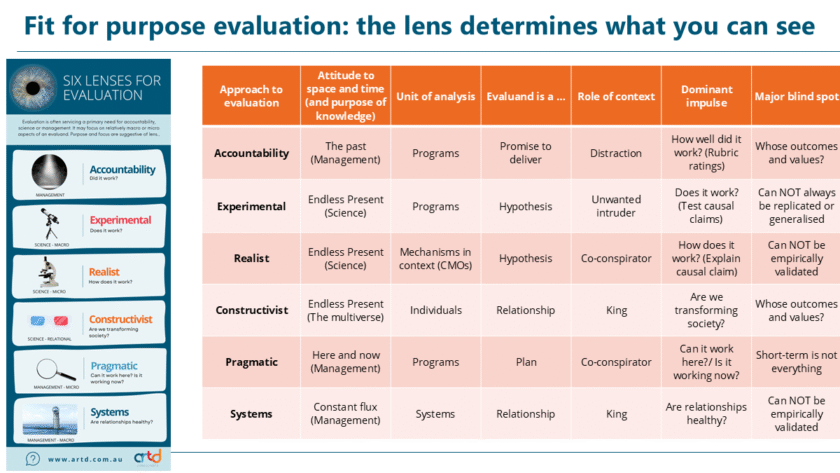
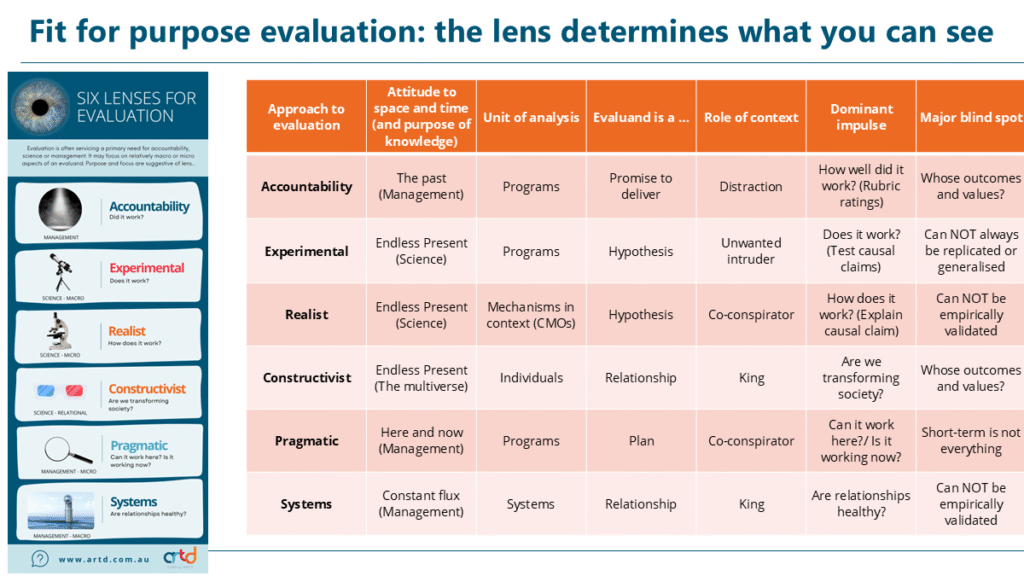
Six major paradigms or lenses are often used in evaluation. They may be compared and contrasted in various ways and extents – here I have tried to focus on what is common and what is different across these paradigms that are of most importance to the design of fit for purpose evaluations. For example, in the figure below, we can see that realists and empiricists overlap and agree on an overtly scientific approach to evaluation, but diverge on the unit of analysis. Similarly, systems and constructivists lenses agree on the overarching importance of context, but differ on the nature of reality that is important to consider; that of individuals or of whole systems.
Evaluators should be flexible and honest enough to not only pick the most useful paradigms in any given situation, but be able to explain how knowledge is interpreted by that paradigm. Being up front about our paradigm will allow us to avoid unnecessary arguments about the nature of an evaluation that turn on issues of paradigm and interpretation (rather than on issues of fact), which can often turn into ad hominem attacks, and enable more considered conversation about the selection of the right approach for the evaluand and constraints.