
Turning the Tide Together: Reflections From the 2025 Stop Domestic Violence Conference
Late last year, Stephanie Quail and Natalie Martino attended the 2025 STOP Domestic Violence Conference on Yugambeh Country on the Gold Coast. The theme, ‘Turning the Tide: Supporting Survivors and Shaping Change’ reflected the urgency and momentum for collective action and long-term, systemic change.
The conference brought together a range of voices – researchers, practitioners, lived-experience advocates, counsellors, and community leaders. There was a strong emphasis on breaking down barriers between sectors and a sense of shared responsibility in creating solutions together. This idea was captured instantly on the first day by Sarah Barnbrook, who in her presentation on the rise of digital abuse, stated ‘Safety is not a personal skill; it is the environment we create.’ Her words stayed with us throughout the conference as people spoke about safety being everyone’s responsibility.
Several presentations focused on the unique needs of specific communities such as migrants, LGBTQIA+ people and people with disability, and the need for appropriate initiatives and services. Victoria’s Disability Family Violence Crisis Response Initiative (DFVCRI) was a key example of targeted capacity-building across the family violence sector to improve practical support for victim survivors with disability in crisis. Dr Kerryn Drysdale, Senior Research Fellow at the Centre for Social Research in Health (CSRH), added another perspective highlighting the cultures of care within the queer community and the value of strengths-based, community-led approaches in preventing violence. Her presentation reinforced that programs are most effective when they are designed with those who use them – consistent with the philosophy of ‘nothing about us without us’. This is our approach at ARTD when working with our peer researchers, recognising the rights of people with lived experience to influence the policies and programs affecting their lives.
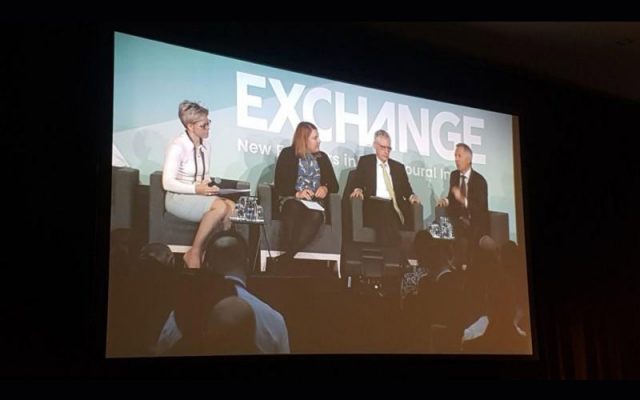
Another area of interest was the focus on economic abuse. The keynote panel by Commonwealth Bank noted how perpetrators can use economic control as leverage in domestic relationships, and that building economic independence through financial counselling is essential for long-term safety.

Image Source: STOP Domestic Violence Conference 2025
In the DFV sector we often see the ‘River of Primary Prevention’ diagram. It was encouraging to see it once more at this conference and the abundance of talks on how we can take an ‘upstream’ approach to stop violence from happening in the first place, rather than solely focusing on response and recovery. As part of this it is important to understand men and boys’ experiences of violence and childhood maltreatment, and how this can support more effective primary prevention approaches as well as programs working with people who use violence. Tony Johansson’s presentation on Family Life’s Talk4Change program explored what’s needed for effective program design, especially the role of the therapeutic alliance in men’s behaviour change work. His emphasis on measuring genuine engagement – not just compliance is something we’ll be thinking about as we consider how to assess the true impact of similar interventions in the future.
We left the conference surprisingly hopeful, given the content that we gathered to discuss. We’re excited to take the discussion and the perspectives of the panellists back to our teams in the domestic, family and sexual violence sectors.